
Open the slope without leaving it vulnerable

My steep hillside is overgrown and impossible to maintain.

A steep hillside can become a part of the property no one uses. Brush grows above eye level, fallen limbs lodge across the slope and vines hide the ground. Walking it with a saw feels unsafe, yet driving a mower, skid steer or tractor across it may be worse. The goal is not simply to remove vegetation. It is to regain visibility and access without turning a rooted slope into exposed soil that moves during the next hard rain.

Does this sound familiar?

What homeowners usually notice first

  • The slope is too steep to mow or brush-hog safely
  • Honeysuckle, briars and saplings have closed the view
  • You cannot see holes, loose rock or fallen material under the growth
  • Runoff already cuts small channels through the hillside
  • You want a trail, view corridor or maintainable understory—not a bare bank
Why it happens

The condition builds over time.

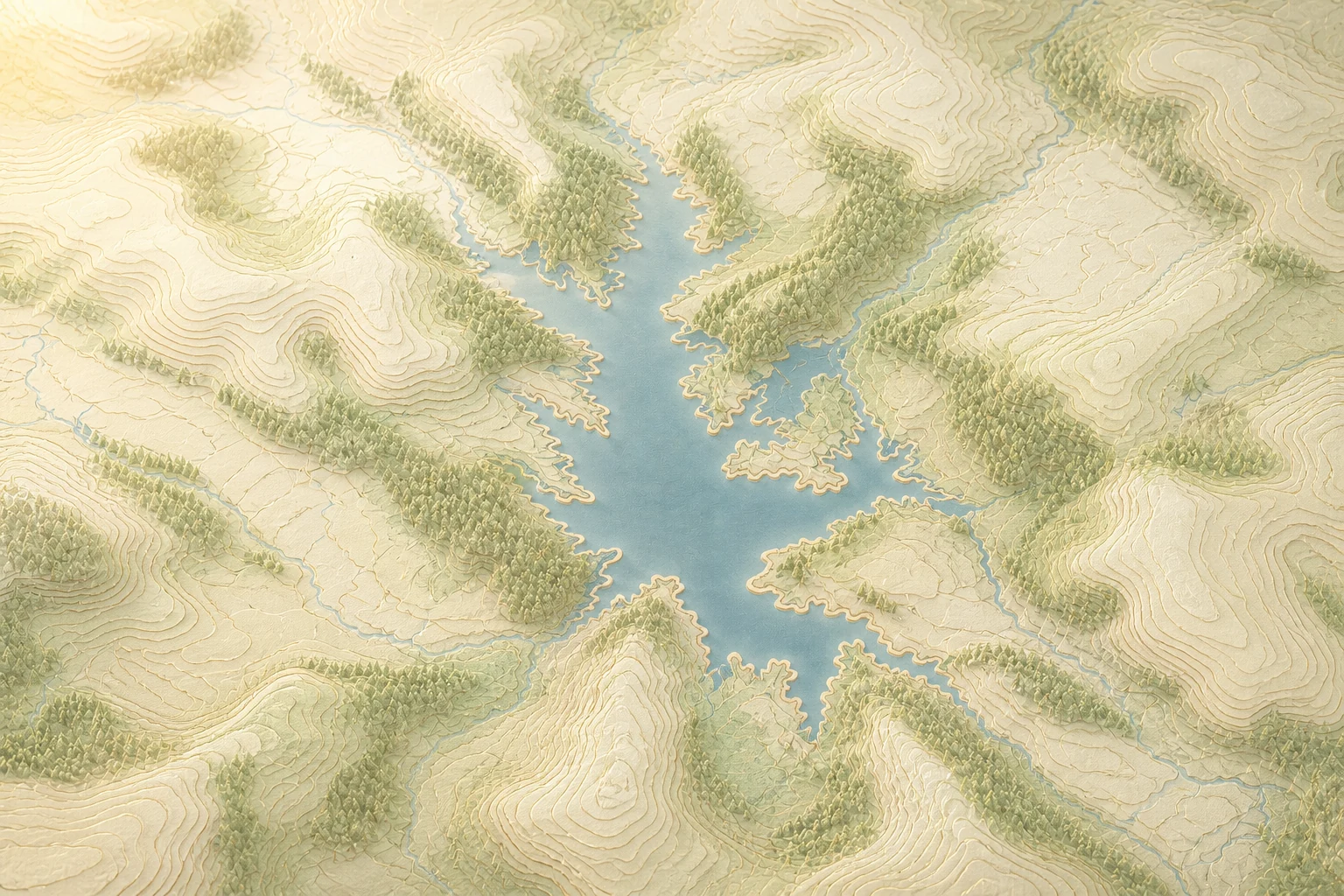
Steep ground magnifies ordinary clearing mistakes. Water accelerates as it travels downhill, and long slopes give runoff more distance to gather erosive force. Dense invasive shrubs may make the hill inaccessible, but their roots and the surrounding leaf layer still help cover soil. Removing everything indiscriminately, compacting the surface or creating a straight downhill travel lane can increase runoff and expose thin hillside soils. Seepage, a failing toe or a sliding bank is a slope-stability problem, not merely a brush problem.

How Contour Land Ops solves it

A selective, site-specific reset.

Contour first separates vegetation access from slope repair. For a stable hillside whose main issue is overgrowth, an excavator may work from a safer bench, top or toe position and reach into selected brush rather than repeatedly traversing the face. Mature trees, useful native cover and root systems can be retained while invasive shrubs, vines and obstructing saplings are selectively reset. Mulched material can provide temporary surface cover, but it is not a substitute for permanent vegetation. We avoid promising structural stabilization; active slumping, major erosion, retaining-wall failure or persistent seepage calls for an engineer or qualified conservation professional before clearing changes the load or drainage.

Local relevance

Built around Northeast Ohio ground.

The Chagrin River watershed and the rolling glacial terrain around Chagrin Falls, Russell, Bainbridge, Chester and Munson create wooded side slopes, ravines and wet toes that are very different from an open production acre. Lake-effect rain, snowmelt and freeze-thaw cycles can reveal weak drainage paths quickly. The best local project often opens a limited view or maintenance route, keeps the canopy and hillside character, and leaves enough rooted cover to protect the ground.

From problem to service

The work that may fit this property

These service pages explain the methods in more detail. The on-site visit determines the right combination.

Research behind the guidance

Official resources worth knowing.

These sources inform the cautions on this page. Site-specific permitting and engineering decisions still belong to the responsible agencies and qualified professionals.

Questions homeowners ask

Clear answers before the machine arrives.

Can you drive machinery across any steep hillside?

No. Slope angle, soil, moisture, access, overhead hazards and safe machine position determine what is responsible. Excavator reach can reduce travel but does not remove those limits.

Will clearing the brush make the hill erode?

It can if too much rooted cover is removed or soil is disturbed. The plan should retain useful vegetation, avoid creating straight runoff paths and include prompt stabilization where ground is exposed.

Can forestry mulch stabilize a hillside permanently?

No. Mulch may protect some surface temporarily, but long-term erosion control depends on stable slope geometry, drainage and established vegetation.

What if the hillside is already sliding or seeping?

Pause ordinary clearing and involve a qualified engineer or conservation professional. Active movement and groundwater problems need diagnosis before vegetation or soil is changed.

Can you make a trail across the slope?

Potentially. A route that follows or gently crosses the contour is usually less erosive than a straight downhill line, but grade, drainage and intended use must be evaluated on site.

Show us what is happening on your property.

Send the township, a few photos and what you want the area to become. We will tell you whether Contour is the right fit.