
Blackberry brambles can be native—and still take over the part of the property you need to use.
Thorny canes spread through sunny openings, catch clothing, hide wire and close trails. CONTOUR opens the places that need access while preserving berry patches that still have value.
Not every thicket belongs in the “invasive” bucket.
Blackberry and raspberry plants belong to the genus Rubus. Their roots and crowns live for years while individual canes typically grow, fruit and die on a two-year cycle. In a sunny disturbed area, those roots can keep sending up vigorous new canes until a useful opening becomes a thorny wall.
That does not make the plant ecologically worthless. Native brambles provide fruit, flowers and cover. The practical question is where the patch helps the property—and where it prevents access, inspection or maintenance.
Canes spread faster than the usable edge.
A path narrows each summer. A fence disappears behind arching stems. The back of a field becomes impossible to mow, or children and pets cannot reach a wooded area without pushing through thorns. Dead canes remain tangled beneath the new ones, making a patch look—and feel—denser every year.
Blackberry is most competitive where sunlight reaches disturbed ground: old fields, logged openings, fence rows, road edges and the transition between maintained lawn and woods.
Clear the conflict, not every berry plant.
We start by defining the result. That may be a reopened trail, a maintainable fence corridor, a cleaner yard edge or a reclaimed opening. Suitable canes and woody competitors can be processed with forestry mulching while valuable trees and an intentional berry patch remain marked as keep zones.
A first pass is a reset, not a promise that perennial roots disappeared. We plan enough access for future mowing or follow-up and explain where recurring maintenance is likely.
What to photograph before the site visit.
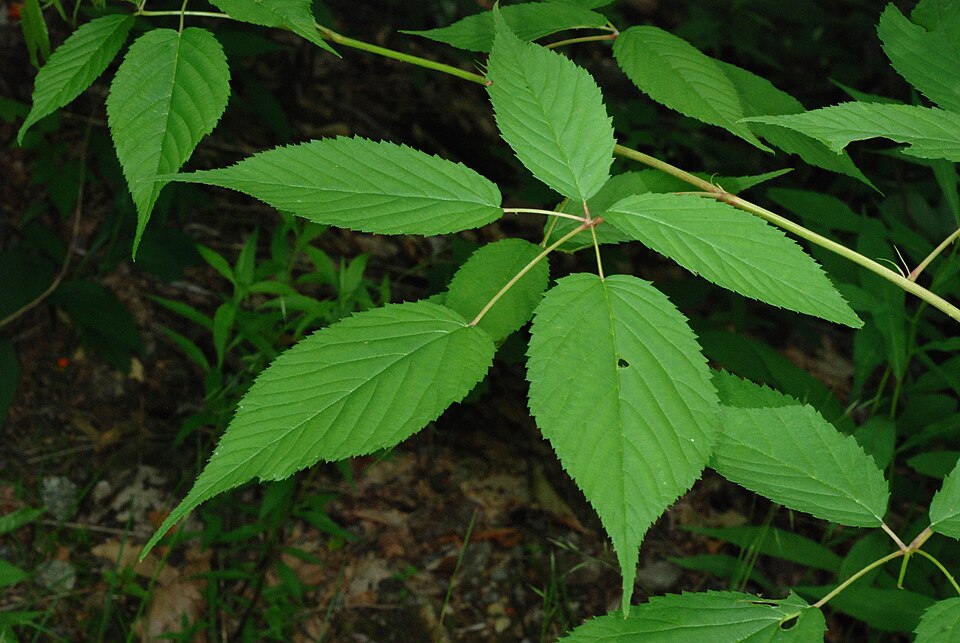
Send one wide photo of the entire patch, then close photos of a cane, the top and underside of a leaf, flowers or fruit if present, and the point where the leaf stalk meets the cane. Those details help separate blackberry, black raspberry, multiflora rose and mixed thickets.
Brambles usually share the site with another problem.
The quote can connect the thicket to the finished use instead of treating plant removal as an isolated task.
Useful bramble references.
These extension references explain bramble identification, growth cycles and why native plants can still become unwanted woody growth in the wrong place.
Keep what is useful. Clear what is in the way.
Are blackberry brambles invasive in Ohio?
Not automatically. Allegheny blackberry and several other Rubus species are native and valuable to wildlife. A native plant can still spread aggressively into a sunny disturbed area and make a trail, fence line or yard edge unusable.
How can I tell blackberry from multiflora rose?
Blackberries usually carry three to five toothed leaflets and produce aggregate berries that ripen from red to black. Multiflora rose has arching canes, clusters of small white flowers, persistent rose hips and a distinctive fringed stipule where the leaf stalk meets the cane.
Will one mulching pass permanently eliminate blackberry?
No. Brambles grow from perennial crowns and roots and can send up new canes after top growth is cut. Mulching creates access and a major reset; the maintenance plan may include mowing, repeat cutting or selective treatment by an appropriate provider.
Can you keep part of a blackberry patch for fruit or wildlife?
Yes. We can identify a keep zone and clear the canes that block a trail, fence, view, building area or maintained yard edge.
Where do bramble thickets usually take over?
They favor sun and disturbance, so they commonly expand along field and woodland edges, fence rows, utility corridors, old clearings and recently opened woods.
Show us where the brambles are winning.
Send photos, the township and what you want the area to become. We will help separate plant identification from the practical clearing plan.